


Most expansion advice hands you an opening checklist. Opening is the easy part.
The hard part is that a second unit copies whatever you already have, including the parts you personally fix every week. Money and people decide whether the next lease is an asset or an anchor. Settle both before you look at buildings.
Contents
- Pass these five gates before you sign
- Pick a growth model your cash supports
- Fund the downside, not just the buildout
- Pick a market and site that fit
- Build the bench before the lease
- Standardize the things every unit must copy
- Open, measure, then earn the next unit
- Design the money setup before unit two
- Questions operators ask before unit two
- Set the money rules before you open
Pass these five gates before you sign
Are you ready for location two?
-
Gate 1
Did unit one cover its own costs, its own debt service, and a market-rate salary for whoever runs it, in all 12 of the last 12 months?
No. Fix unit one. Re-run this in two quarters.
Yes. Go to gate 2.
-
Gate 2
Can you leave for 14 straight days without a single decision routing to your phone?
No. You have an SOP problem, not a lease problem.
Yes. Go to gate 3.
-
Gate 3
Is the GM for unit two already on payroll and already running periods end to end?
No. Hire and train 6 to 9 months before you sign.
Yes. Go to gate 4.
-
Gate 4
Can you cover buildout, deposits, pre-opening payroll, 6 months of the new unit's operating costs, and a 10% contingency, without touching unit one's cash?
No. Fund the gap or shrink the format.
Yes. Go to gate 5.
-
Gate 5
Does the site fit the model you can staff and supply from where you are?
No. Keep looking. A cheap lease in the wrong trade area is the most expensive mistake on this page.
Yes. All five gates are clear.
-
Green light
Sign, then open on the 90-day plan below.
Every gate needs evidence, not a gut read.
A failed gate does not mean no forever. It means not this lease.
1) Unit one makes money every month, not just the good ones
Proof: twelve months of P&Ls where the restaurant covers its own costs, its own debt service, and a market-rate salary for whoever runs the building, without a holiday quarter carrying the year.
That last clause is where operators fool themselves. Last year 42 percent of operators reported their restaurant was not profitable, and more than 9 in 10 cite food, labor, insurance, energy, and swipe fees as significant challenges.
Heads up
If the only good months are the ones with a catering block or a street festival, the concept is not proven, it is seasonal.
Fix price, prime cost, or the concept first. A second unit multiplies a thin margin. It does not repair one.
2) The restaurant runs when you are gone
Proof: fourteen straight days off, no calls, no approvals, no ordering from your phone. Not a long weekend. Two weeks, because week two is where the cracks show.
The test is not whether the doors stay open. It is whether anyone made a decision you would have made differently and nobody needed you to make it.
Heads up
If your staff texts you to approve a $200 repair, you do not have an operator problem. You have a spending-rules problem, and it follows you to the next address.
Write the decision list first. Who orders, who approves, up to what dollar amount, and what happens at 11pm on a Saturday when the walk-in fails.
3) The next GM already works for you
Proof: the person who will run unit two is on payroll today, has closed periods end to end, and has run your schedule, your order guide, and your inventory count without correction for at least two months.
Hiring a stranger to open a new restaurant is the most common way operators lose the first year. They are learning your system and building a team at once, in a building nobody knows.
Heads up
Promoting your best cook is not the same as having a bench. Ask who backfills the person you are promoting.
If the answer is "we will hire someone," the lease waits two quarters.
4) The money survives a slow open
Proof: you can fund buildout, deposits, pre-opening payroll, six months of the new unit's operating costs, and about 10% for the costs you cannot predict, while unit one keeps its own cash.
Restaurants run thinner than almost anyone. In the JPMorgan Chase Institute's study of 600,000 small businesses, restaurants held the fewest cash buffer days of any industry at 16, against a median of 27 days across all small businesses.
Heads up
That cushion is the normal state of a single restaurant. A second unit spends it in week three of a slow open.
If funding unit two requires unit one's operating cash, you are not funding an expansion. You are financing it with the business that already works.
5) The site fits the model you run
Proof: the trade area, the format, and the labor pool match what you already know how to operate, and the drive from your current unit is short enough that your GM can actually cover both during the opening.
The market is not handing out room for error. FTI Consulting's global restaurant report puts it plainly: growth is harder won and margins are tighter than in previous years.
Heads up
A rent number that looks like a deal usually is one because of something you have not found yet. Traffic pattern, parking, delivery access, or a lease clause.
The site serves the model. Never rebuild the model to justify a site.
Pick a growth model your cash supports
Four ways to get to unit two, and they are not interchangeable. The industry has been drifting one direction: FTI describes franchisors and operators shifting toward more asset-light growth structures, which is a polite way of saying capital got expensive.
1) Company-owned keeps the margin and the risk
You own the unit, the P&L, and the mistakes. This is the right model when your margin is healthy and your bench is real, because nobody splits the upside with you.
It is the wrong model when the only way to fund it is a loan against the first restaurant. You grow as fast as your cash lets you, and not one unit faster.
2) Franchising sells a system, not a restaurant
Franchising trades unit margin for other people's capital. It is also a legal product with rules attached, not a faster way to unit two.
Under the FTC's Franchise Rule, a franchisor must hand a prospective franchisee the disclosure document at least 14 calendar days before that franchisee signs or pays.
Worth knowing before you build a pitch deck: the Rule does not require a franchisor to make financial performance representations at all. Any claim about sales, income, or profits has to live in Item 19.
You cannot franchise a system you have not written down. If you are seriously weighing this, the deeper walk through documents, fees, and support obligations is in the guide to how to franchise a restaurant.
3) Partnership deals buy you an operator
A managing-partner or equity-partner deal puts a real operator in the building with skin in the game. You give up a slice of unit economics and you get someone who does not quit in month four.
Heads up
Partner deals fail on the exit terms, not the entry terms. Write the buyout formula before anyone signs.
4) Buying a running unit skips pre-opening burn
An acquisition gets you revenue on day one and a trained crew, minus the pre-opening burn. You inherit their equipment, their reviews, and their habits.
You are also buying somebody else's problems. Real P&Ls, deferred maintenance, lease assignment terms, and whether the sales walk out the door with the departing owner.
Fund the downside, not just the buildout
Most expansion budgets price the buildout and stop. The buildout is the part with a quote attached, which is exactly why it is the least dangerous number in the plan.
The SBA splits it correctly: one-time expenses like equipment, permits, licenses, and fees, then monthly expenses like salaries, rent, and utilities.
Its guidance is to count at least one year of monthly expenses, with five years being ideal, on top of the contingency in Gate 4.
One location vs two: where the money actually goes
Illustrative scenario for a single fast-casual unit at $1.2M net sales opening a second unit.
| Line | One location today | Two locations, year one |
|---|---|---|
| Net sales | $1,200,000 | $1,980,000 unit two opens at 65% of unit one |
| Prime cost, food plus labor | $720,000 60% | $1,211,400 unit two runs 63% while training |
| Occupancy | $96,000 8% | $166,200 new lease at 9% |
| Other operating | $168,000 14% | $277,200 |
| Restaurant-level profit | $216,000 | $325,200 |
| Above-store overhead: bookkeeping, multi-unit manager, software, insurance admin | $0 | $145,000 |
| Pre-opening payroll and training, one time | $0 | $60,000 |
| Cash left to the owner | $216,000 | $120,200 |
Read the last row twice. Nothing in that scenario went wrong. That is a normal year one.
Two costs cause it. Above-store overhead is new spend that neither restaurant needed when there was only one, and the second unit ramps instead of opening at full volume.
Build the same rows for your own concept before you tour a site. That model, and how to hold a budget against actuals every period, is in the restaurant budgeting guide.
Then decide what goes on a loan and what does not. Lenders will ask for a business plan, an expense sheet, and financial projections for the next five years.
The hood system and the walk-in are two different financing decisions. Those loan, lease, and SBA tradeoffs are broken down in the restaurant equipment financing guide.
Pick a market and site that fit
The headline number looks fine. Total restaurant and foodservice sales are projected to reach $1.55 trillion. The number under it is the one that matters for a new lease: real sales growth of only 1.3 percent, and 60 percent of operators reported softer customer traffic.
Most of the growth is price, not people walking in. A new unit that assumes traffic growth is assuming the thing the industry is not getting.
Run the site against five things, in this order:
- Demand you can name. Daypart mix, employers, schools, or residential density. "The area is growing" is not a demand case.
- Cannibalization. If the new site pulls from your existing guests, model the second unit at lower sales and the first unit lower too. Both, not one.
- Labor pool and drive time. Can your current GM cover both buildings during the opening, and can you staff the new one from the same market.
- Access and delivery. FTI notes off-premises channels and retailers taking share while digital platforms increasingly control customer access. A site with no clean pickup lane is a smaller site than it looks.
- Format fit. A smaller footprint with a tighter menu is a different business than your flagship. Decide that before you sign, not during buildout.
Where demand is actually moving, by format and daypart, is the current read in the restaurant trends roundup.
Build the bench before the lease
You are not the only one short of leaders. Nearly three quarters of operators plan to hire, and expect difficulty finding experienced managers and chefs.
That is the whole argument for building the bench 6 to 9 months ahead. The best opening GM you will ever have is someone who already runs one of your restaurants.
The structure that works is boring on purpose:
- Move your proven GM to the new unit. They know the system, so they only have to learn a building and a crew.
- Backfill with the assistant you have been training. This is the promotion you should have been planning for a year.
- Name the trainer. One person owns opening training for every future unit, and they write down what they teach.
- Write the decision list. Ordering limits, comp authority, repair approvals, and hiring authority, per role, in dollars.
Heads up
The manager who is great on the floor is not automatically great at ordering, counting, and holding a labor target. Test the back-office half before you hand over a P&L.
Standardize the things every unit must copy
Two restaurants doing the same thing two different ways is not a chain. It is two restaurants that share a logo and a bank account.
Standardize before you open, because the second unit will copy whatever exists on opening day and then defend it. FTI puts the winners in the same place: operators making disciplined investment decisions instead of buying whatever the last unit happened to need. For two restaurants that is one call. What gets to be different between the buildings, and what never does.
What must be identical:
- Recipes, specs, and portions. Same yield, same plate, same cost. If a dish only works when one cook makes it, it is not ready for two units. Which dishes earn their spot is a menu engineering question, and it is cheaper to answer once with a tight menu than twice with a sprawling one.
- Vendors, order guides, and receiving. One approved vendor list, one order guide, one receiving process where somebody actually checks the truck against the invoice. Vendor terms and the software that tracks them are covered in the restaurant vendor management breakdown.
- POS menu, buttons, and reporting. Identical item names and categories, or your two P&Ls will never compare. The platforms that hold scheduling, inventory, and reporting across units are compared in the best restaurant management software guide.
- The chart of accounts. Same GL codes, same period calendar, same close date. Change this after unit two opens and you lose your history.
- Card rules and receipt rules. Who can spend, up to what limit, and how the receipt gets back with the right restaurant attached.
Everything else can vary by unit. Hours, staffing model, local marketing, and daypart focus should flex to the trade area.
Where Tab fits when unit two opens
Your POS runs service. Your accounting system stores what already happened. Neither one chases the manager who bought a mop at 11pm and never turned in the receipt.
Tab is a back-office finance tool that works alongside the POS and the ledger you already run, not a replacement for either one. It covers the part that gets worse the day you have two addresses:
- One card program across both restaurants. Unlimited virtual and physical cards, a limit and controls per card, each card assigned to a person and a restaurant before anyone spends. No credit checks.
- Receipts come back by text. The cardholder gets a prompt after the swipe and sends back the receipt, the note, the category, and the restaurant.
- Every charge carries the restaurant it belongs to. Location tags ride on the transaction, and a shared purchase can be tagged to both units instead of landing wherever the bookkeeper guesses.
- Entities stay separate without separate logins. Create as many entities as you need and run them from one login, with multi-GL coding and approvals in the same place.
- The books get the data in one shape. A full integration with QuickBooks Online, and customizable CSV exports for every other ledger.
What the manager sees after the swipe
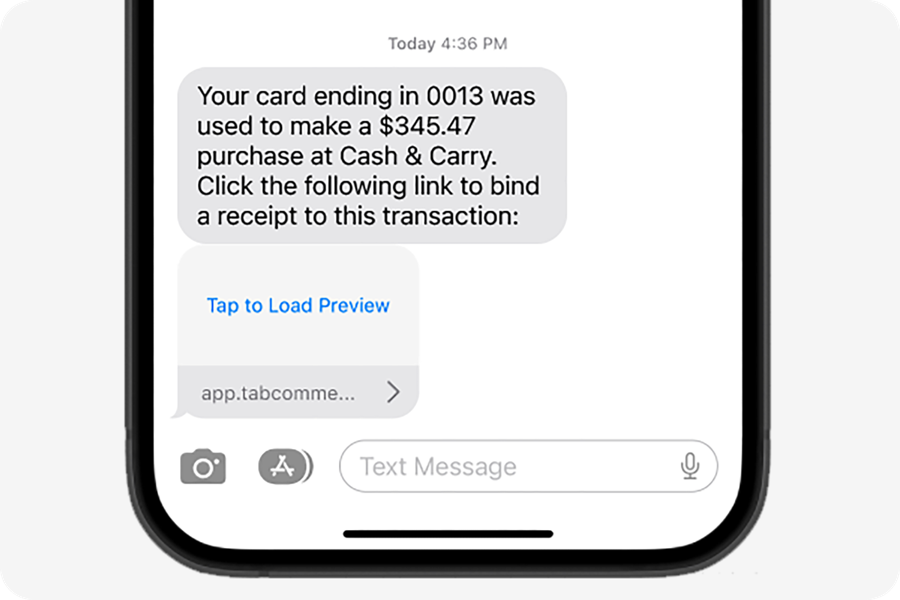
Cards earn unlimited cash back on the Base plan, and setup takes about a week, with the account ready for its first billing cycle. Stand it up before the new unit opens, not during opening week, so the first purchase in the new building lands in the right place.
"It's rare to find software partners whose products fully live up to the promises made during the sales process. Tab not only met expectations but exceeded them. It's been a win for both our management and store teams."
Juliana, Owner, Heidi's Brooklyn Deli (8+ locations)
Open, measure, then earn the next unit
The first 90 days after unit two opens
-
Days 1-14
Overstaff on purpose
Owner or founding GM on the floor every shift. Track ticket times, void rate, and comp rate daily. Do not touch the menu.
-
Days 15-30
Fix the build, not the concept
Re-time the line, reset par levels, retrain the two stations that miss most. First full inventory count. First location-coded P&L.
-
Days 31-60
Hand it over
Founding GM steps back to four shifts, then three. Unit-two GM owns the schedule, the order guide, and the count. Weekly variance review against unit one.
-
Days 61-90
Test the system, not the people
Owner off site 14 straight days. Compare unit two to unit one on prime cost, labor percent, and receipt turn-in. Close the month on the same calendar as unit one.
-
Day 90
The gate for unit three
Green light only if unit two hits its own plan for two straight periods with nobody from the office on the floor. Otherwise stabilize and re-run at day 180.
Opening week is theater. The number that matters is whether unit two hits its own plan once the founding team stops propping it up.
Measure both units on the same four lines every period: prime cost, labor percent, restaurant-level profit, and how fast the period closes. If unit two closes two weeks after unit one, the problem is the process, not the people.
Sage puts that on a shorter clock once you run more than one building, calling for frequent, often weekly, Profit and Loss (P&L) reviews. A food cost running high in one unit then gets caught in days instead of at quarter end.
Do not sign a third lease inside the stabilization window. Sage names the same trap, calling it the most common mistake new multi-unit operators make: expanding too quickly without having scalable systems in place. Two units that both work is a system. Two units where one is being carried is one restaurant and one project.
Design the money setup before unit two
This is the part everybody leaves to the bookkeeper, and it is the part that decides whether you can read your own numbers next year.
Decide five things before the new entity exists:
- Entity structure. Separate LLCs per unit, or one entity with location tracking. This is a tax and liability question, so it belongs with your CPA and your attorney, not a blog post.
- Bank accounts. Which account collects POS deposits, which pays vendors, and which one nobody touches.
- Who holds cards, and their limits. By role and by restaurant, decided before opening rather than after the first surprise charge.
- Coding rules. Same GL codes, same location tags, same period calendar across both units.
- The accounting handoff. How transactions, receipts, and location data get into the ledger without somebody retyping them.
That last one is where multi-unit groups quietly lose weeks. Books stay open after month end because receipts trickle in, and a second restaurant doubles the trickle.
Sage puts the cost of running disconnected systems plainly: you might not see a spike in labor costs or a dip in sales until the end of the month when you review the books. Two sets of books close late for the same reason.
Tab gives each entity its own cards and gives each swipe the restaurant it belongs to, so the coding is done before the bookkeeper opens the period instead of after.
If QuickBooks Online is your ledger, the multi-unit setup, class and location tracking, and chart-of-accounts decisions are walked through in QuickBooks for restaurants. Get the structure right before the second entity exists, because renaming accounts later erases the comparison you opened the second unit to get.
If Xero is the ledger instead, the venue tracking and month-end setup is covered in Xero for restaurants.
Questions operators ask before unit two
When unit one covered its own costs, its own debt, and a market-rate salary for its operator in all twelve of the last twelve months, the building runs without you for two straight weeks, the next GM is already on payroll, and the new unit is funded without touching unit one's cash.
There is no universal number, and anyone quoting one is guessing at your rent. Build it from your own model: pre-opening payroll and training, deposits, six months of the new unit's operating costs at a ramped sales line, plus about 10% for the costs you cannot predict.
It can be faster on units and slower on cash. You are funding development with franchisee capital, but you are also building a legal and support function, writing the operating manual, and handing every prospect a disclosure document at least 14 calendar days before that franchisee signs or pays.
Many multi-unit groups run a management entity plus separate entities per location, but the right answer depends on liability, taxes, financing, and your state. Get it from your CPA and attorney, then make sure your cards, coding, and reporting can follow the structure you chose.
The chart of accounts and the spending rules. Recipes and vendors matter, but if the two units code purchases differently you cannot tell whether the new one is actually working.
Set the money rules before you open
Pick the model, fund the downside, name the GM, then write down what every unit must do the same way. That sequence is the whole strategy.
General information only, not legal, tax, or financial advice. Entity structure, financing, and franchise decisions should be reviewed with your own CPA and attorney.


